Multi-Experiment Workflow
- Name
Multi-Experiment Workflow
- Context
The pattern applies to a system with the following characteristics:
A multi-experiment workflow plan exists that lists the predetermined actions to be performed for executing each experiment plan.
An experiment plan exists for each experiment that lists the predetermined actions to be performed while running the experiment.
Actuators may exist to allow for moving or controlling something before, during and/or after running the experiment.
Sensors may exist to allow for measuring something before, during and/or after running the experiment.
Instruments may exist that contain sensors and potentially actuators.
Robots may exist that contain actuators and potentially sensors and that execute predetermined actions from the experiment plan in an automated or autonomous fashion.
- Problem
Certain predetermined actions need to be performed to run a set of experiments in serial (one after another) and/or in parallel (simultaneously).
- Forces
Only pre- and post-experiment conditions are considered in performing the predetermined actions to run the set of experiments in serial and/or parallel. Safety-related conditions during the experiments may be considered. Only pre-experiment conditions are considered in performing the predetermined actions while running each experiment individually, unless the Experiment Steering strategic pattern or the Design of Experiments strategic pattern are being used for some or all experiments. If the Experiment Steering strategic pattern is being used for a particular experiment, then changing conditions during this experiment are considered in performing the predetermined actions while running it. If the Design of Experiments strategic pattern is being used for a particular experiment, then post-experiment conditions are considered in performing the predetermined actions to run it with different experiment plan parameters.
- Solution
A multi-experiment workflow controller orchestrates the execution of the experiments using a predetermined multi-experiment workflow plan (Fig. 10). The multi-experiment workflow plan’s execution is automated, performed in an open loop control and may involve human interaction. The multi-experiment workflow controller may monitor one or more experiment controllers for dependency reasons. The multi-experiment workflow plan contains a complete description of the predetermined actions to be performed for orchestrating the execution of the experiments including any dependency-related responses.
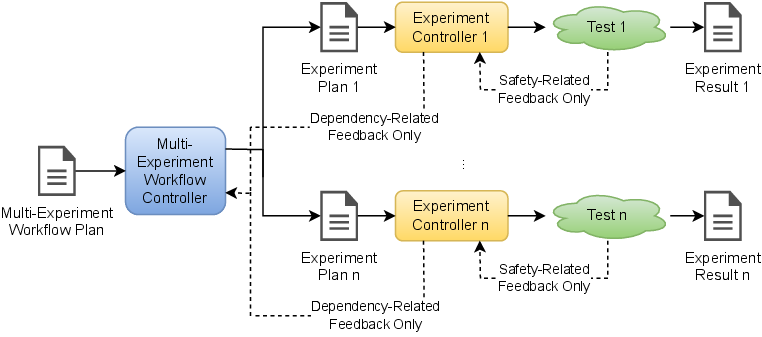
Fig. 10 Multi-Experiment Workflow strategic pattern components and control/data flow
Multiple experiment controllers execute their experiments using their predetermined experiment plan. Each plan’s execution is automated, performed in an open loop control and may involve human interaction. Each experiment controller may monitor the experiment for safety reasons. Each experiment plan contains a complete description of the predetermined actions to be performed for running its experiment, including any safety-related responses.
Some experiments may be executed in parallel, as they do not depend on each other, while other experiment may be executed in serial due to dependencies. The orchestration of the execution follows a DAG with the experiments as vertices and the edges as dependencies (Fig. 11). A dependency between experiments may arise when one experiment needs the result of another.
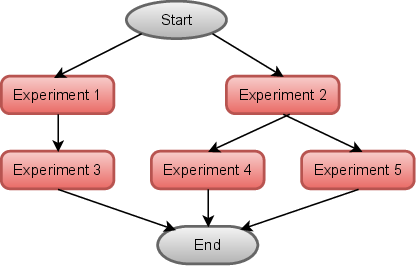
Fig. 11 Example of a Multi-Experiment Workflow strategic pattern directed acyclic graph
This pattern offers an open loop control with safety-related feedback on each experiment and a separate loop control with safety-related feedback for each experiment. Experiment plan execution is automated within the open loop control for each experiment, i.e., its list of actions is performed without external or human intervention that can unnecessarily hold up execution. Multi-experiment workflow plan execution is automated within the open loop control for all experiments, i.e., its list of actions is performed without external or human intervention that can unnecessarily hold up execution. A set of serial and/or parallel experiments is controlled.
- Resulting Context
Experiments are executed automatically in serial and/or parallel using a predetermined plan.
- Related Patterns
This strategic pattern relies on the Experiment Control strategic pattern for automatically executing each predetermined experiment plan. This strategic pattern can be extended using the Experiment Steering strategic pattern (instead of the Experiment Control strategic pattern) for autonomously executing some or all predetermined experiment plans, with each plan’s parameters changing autonomously during experiments based on progress. This strategic pattern can also be extended using the Design of Experiments strategic pattern for autonomously executing some or all predetermined experiment plans, with each plan’s parameters changing autonomously between experiments based on results. The Experiment Control, Experiment Steering and Design of Experiments strategic patterns can be used together in conjunction with this strategic pattern, individually for each experiment of the multi-experiment workflow. However, the Experiment Control and Experiment Steering strategic patterns are mutually exclusive for the same experiment, as the Experiment Steering strategic pattern extends the Experiment Control strategic pattern.
- Examples
In the ACL science use case, the experiment is a complex sequence of steps involving multiple instruments, actuators, sensors, etc. Thus, the experiment itself could be considered a Multi-Experiment Workflow strategic pattern using a sequence of Experiment Control strategic patterns. Examples of steps that constitute the Multi-Experiment Workflow strategic pattern include the synthesis step and each of the individual characterization steps, such as the gas chromatography, high performance liquid chromatography, and X-ray microscopy. Some of these steps could potentially be performed in parallel if the sample were broken down into pieces such that the pieces could be analyzed be the characterization instruments in parallel.
- Known Uses
This strategic pattern is used every time a set of experiments are performed. Very common examples are (1) a set of parallel experiments that investigate the same physical sample that is getting split up beforehand, or (2) a set of serial experiments that investigate the same physical sample that is getting moved from one experiment to the next. Each of these experiments investigates different properties, where the overall combination of the experiment results may be part of a bigger experiment that encompasses them.