Science Use Case Design Patterns
The INTERSECT AAM system has several loop control problems (Fig. 148). The first loop control implements an Experiment Steering strategic pattern. It obtains temperature data from thermocouple sensors mounted to the base of the printed object and from an infrared (IR) camera that is observing the printing process from an angle above. The temperature data is streamed to an analyzer that performs faster-than-real-time simulation of the printed material’s thermal evolution. The simulation data is used to change the parameters of the laser on the next printed layer. This permits adapting the live printing process to the simulated stresses inferred by the measured data. The second loop control involves the neutron beam of Oak Ridge National Laboratory’s (ORNL’s) Spallation Neutron Source (SNS) to obtain more detailed and multi-scale structural data. The neutron diffraction measurements and corresponding digital image correlation of the entire 3D printing process permit validation of the structural simulation and adaptation of the 3D printing process for the next part to be printed in a Design of Experiments strategic pattern. At the strategic pattern level of abstraction, the individual pattern components are as follows:
The experiment design plan describes the goal, which is the validated 3D printing of a metal part with predetermined structural stresses.
The experiment planner is a simulation-based optimization loop that finds the experiment plan that is predicted to give the desired structural stresses.
The experiment plan is the sequence of predetermined steps and associated parameters necessary to 3D print the metal part. The parameters include the targeted structural stress and the options for changing the laser parameters, such as temperature and speed.
The experiment controller is the control computer of the 3D metal printer.
The test performed in an experiment 3D prints a metal part subject to dynamic control by the experiment controller and targeting desired structural stresses, optionally in conjunction with a neutron beamline where in-situ or ex-situ neutron diffraction data is collected.
The experiment result consists of (1) the 3D printed metal part, (2) the corresponding thermal and surface strain data, (3) the structural simulation data inferring the stresses in the part, and (4) the raw and analyzed neutron diffraction data for validation.
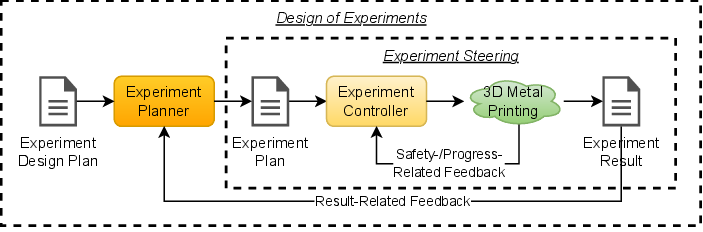
Fig. 148 Experiment Steering and Design of Experiments strategic patterns for the INTERSECT AAM science use case
The INTERSECT AAM system (Fig. 149) implements the Distributed Experiment Steering architectural pattern, as the analyzer that performs the structural simulation of the stresses is a dedicated or shared remote computer, cluster computer, or supercomputer, depending on simulation accuracy, speed needs, and corresponding computational requirements. It further implements the Distributed Design of Experiments architectural pattern, as the analyzer that performs the image correlation and validation of the structural simulation is a remote computing system as well. It may even involve two different remote computing systems, one for the image correlation and one for the validation.

Fig. 149 Distributed Experiment Steering and Distributed Design of Experiments strategic patterns for the INTERSECT AAM science use case